Posts in Inferno Cantos VIII - XI
48. Straight On, Then Right For The Heretics: INFERNO, Canto IX, Lines 107 - 133

Dante, our pilgrim, has passed the gate of Dis and come to the sixth circle of hell, the ring of the heretics. With him, we’ve stepped beyond Virgil’s imaginative landscape from THE AENEID. And we’ve stepped beyond the seven deadly sins as a structuring device for COMEDY. We’ve also stepped into a world where politics and poetry show what people do for and to each other.

Read More
47. Saved At Last . . . By Mercury, Jesus, The Archangel Michael, Someone: INFERNO, Canto IX, Lines 64 - 106

The pilgrim Dante and Virgil have been standing at the walls of Dis forever! Here comes help . . . in the form of the archangel Michael? Jesus? Mercury? Mercury brought the words of the gods to mortals. Is this the coming of eloquence as we depart the last of Virgil’s world to fully enter Dante’s imagination of hell?

Read More
46. How Much Classical Imagery Can One Poem Take? Inferno, Canto IX, Lines 34 - 63

Standing in front of the walls of Dis with our pilgrim, Dante, and his guide, Virgil, we encounter the thickest bits of classical imagery we’ve yet seen in INFERNO. And the poet asks us to interpret it all as an allegory. But of what? And we’re also asked to go back to classical literature and interpret it as allegory, bringing forward that interpretation into this passage.

Read More
44. The Witch Erichtho And The Complications In Virgil's Backstory: INFERNO, Canto IX, Lines 1 - 33

Dante and Virgil are outside the walls of Dis, the city of hell. Virgil seems particularly stuck in some sort of doubtful faith. Or maybe faithful doubt. To remedy that, he launches into the story of his first descent to the bottom of hell—thereby complicating Dante’s masterwork COMEDY, causing a rupture in the fabric of its fiction, repositioning Dante’s work against other classical works, and sticking Virgil squarely in the landscape of Lucan’s PHARSALIA.

Read More
43. Being Human, Even In Hell: INFERNO, Canto VIII, Lines 97 - 130

The pilgrim, Dante, is left alone at the walls of Dis. This passage from INFERNO may be the most human since the opening lines of Canto I. So much is changing! Virgil gets a backstory. Virgil is developing interiority (or an inner emotional space). Virgil is becoming more fatherly. All at the same moment when he abandons the pilgrim—and maybe the poet, too.

Read More
42. The Walls Of Dis, Virgil's Limits, and The Pilgrim's Folly: INFERNO, Canto VIII, Lines 64 - 96

Our pilgrim, Dante and his guide, Virgil, come to the walls of Dis, a geopolitical border of INFERNO. But the poet Dante must also cross an important barrier. Aeneas doesn’t enter Dis in THE AENEID. We have reached the limits of Virgil’s imagination in his masterwork. But not Dante. He will eventually go into Dis where his master (and Aeneas) can’t.

Read More
41. An Angry Pilgrim Among The Angry Sinners: INFERNO, Canto VIII, Lines 31 - 63

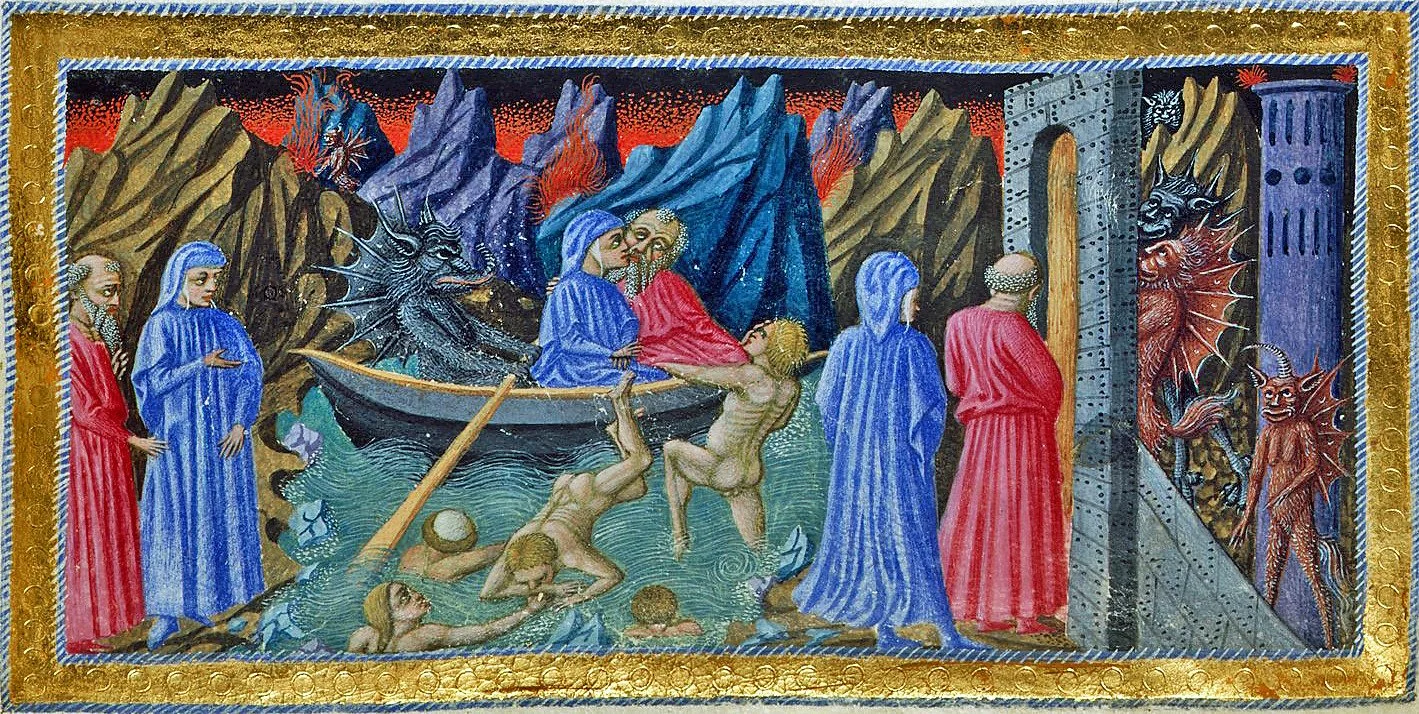
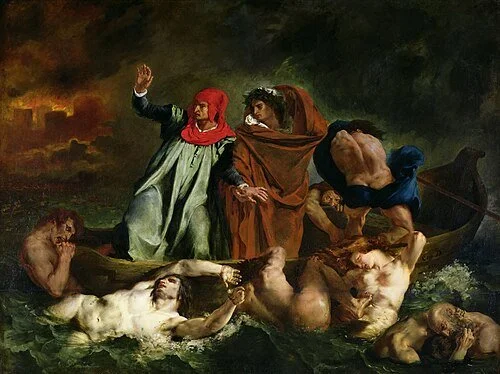
Our pilgrim Dante and his guide, Virgil, are on a boat across the Styx in the fifth circle of hell when a damned soul rises out of the muck and threatens them . . . in a passage packed with interpretive nuggets: Bible verses, personal vendettas, call-outs to previous cantos, and set-ups for subsequent cantos. But most importantly, this passage is about story. The poet is settling into his form.

Read More
40. It's All Plot: An Overview Of The Circle Of Wrath In INFERNO

Rather than interpreting a passage from Dante’s COMEDY, let’s read through the fifth circle of INFERNO, the encounters with the wrathful all the way up to the gates of the city of Dis. We’ve already had three episodes on this circle . . . with more to come. But first and foremost, storytelling is the point of COMEDY and it’s easy to get lost in the interpretive weeds.

Read More
39. The Poet Between The Classical And Modern Worlds: INFERNO, Canto VIII, Lines 7 - 30

The fifth circle. The wrathful. Except where are the damned? Not here. This passage is opens with a scene of interpreting, leads out to a rather obscure figure from classical literature, and finishes up by putting the pilgrim firmly in his body. The poet is rarely satisfied. His art is ever-changing. But it’s settling into the thing that will make it last: storytelling.

Read More