59. Virgil, Your Map Of Hell Needs Work: Inferno, Canto XI, Lines 67 - 90
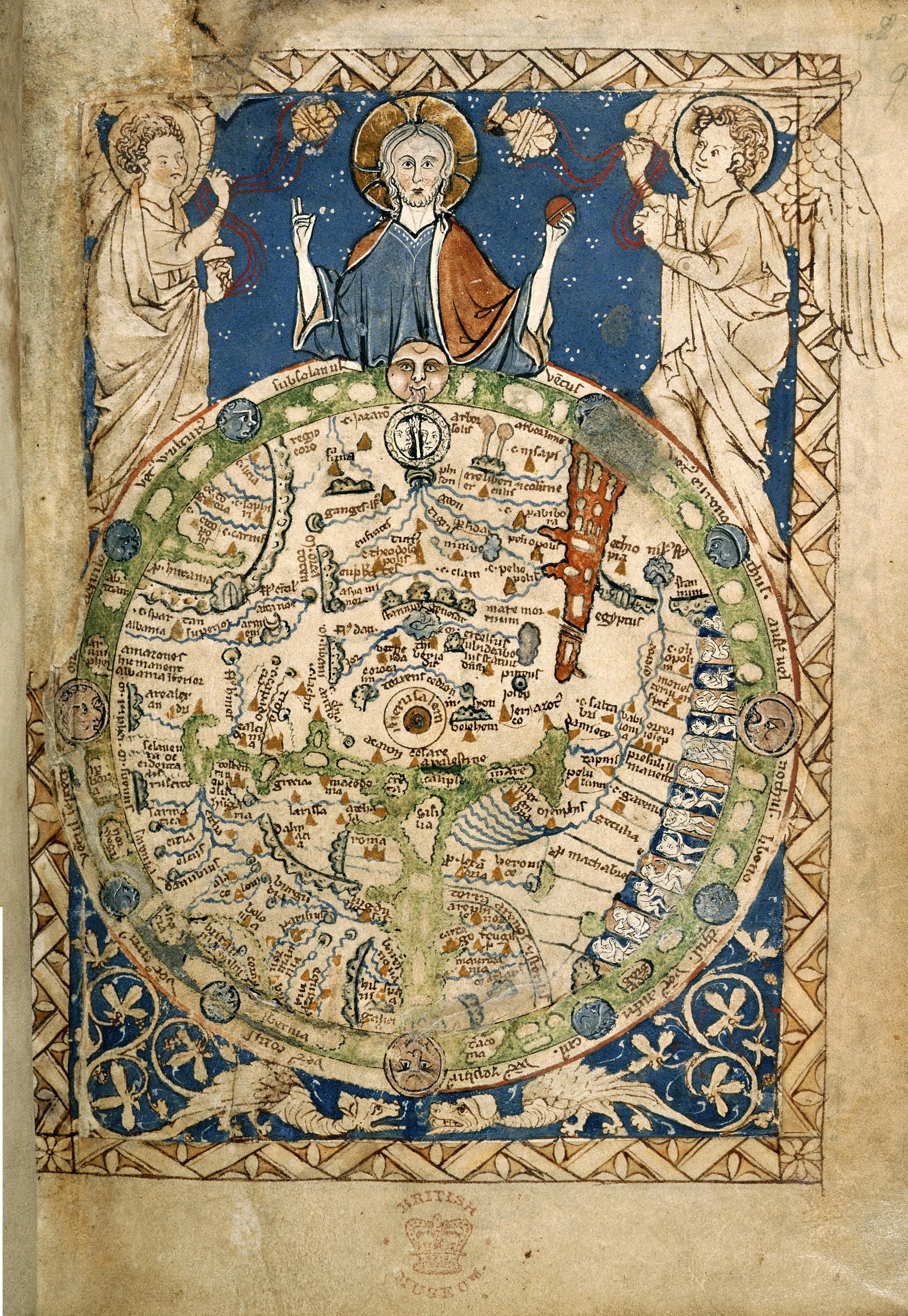
A world map from a psalter (or psalm and prayer book), about 1260 CE
Virgil has carefully mapped out hell for the pilgrim, Dante—or at least the three circles yet to come. But in doing so, Virgil has avoided the circles these two have already walked through.
So our pilgrim has questions. Virgil’s none too pleased. What’s going on emotionally in this complex passage?
And more importantly, what’s going on theologically? The nature of evil seems to be changing. It’s not an action. It’s a state of being. Which means that the poem, COMEDY, is being rethought.
How do we know? Because Virgil’s character is being rethought.
Consider supporting this podcast with a one-time donation or a small monthly stipend, using the PayPal button below:
The segments for this episode of WALKING WITH DANTE:
[01:05] My English translation of INFERNO: Canto XI, lines 67 - 90. If you'd like to see my translation, drop a comment to continue the conversation, or find a deeper study guide, scroll down this page.
[03:16] The pilgrim's question. Starting in flattery, it questions Virgil's mapping Virgil.
[06:45] The pilgrim's question reveals a structural coherence in the upper circles of hell.
[08:23] Now on to Virgil's answer. God has a vendetta. How does that work?
[14:00] The ramifications of Virgil's answer, including the changing nature of both hell and Virgil's character.
My English translation of INFERNO, Canto XI, lines 67 - 90:
And I: “Master, your reasoning
Leads to a lot of clarity and categorizes well
This hole and the people held in it.
But tell me: the souls in the oily swamp,
And those lashed about by the wind, and those battered by the rain,
And those who bash into each other with such harsh words,
Why are they not punished in this smoldering city
If God’s wrath is indeed on them?
And if not, why are they put under such affliction?
And he said to me: “Why does your genius
Wander off like this?
Where does your mind get off to?
“Don’t you remember the words
With which your Ethics fully explicates
The three dispositions that heaven rejects:
“Incontinence, malice, and insane
Bestiality? And how incontinence
Offends God less and so comes in for less blame?
“If you reason well through this line of thought
And bring back to your mind those
Who are punished up there, outside of these fortifications,
“You’ll surely see why those are put aside
From these other sinners, and why the divine vendetta
Strikes them less cruelly than those down there.”
FOR DEEPER STUDY
Three translation issues:
To begin his answer, Virgil drops a word from his written language: pertratta (“explicates” or “fully analyzes”—from the Latin verb pertractare). Virgil has perhaps pulled back from the common tongue and dropped a little Latin on the pilgrim. The word seems to give Virgil the upper hand. Am I learned enough now? It might also underscore his wounded pride. Perhaps?
Virgil goes on to use what both Aristotle and Aquinas would see as a loaded term: disponsizion (“disposition”—line 81). Aristotle and Aquinas are at pains to distinguish between the disposition to do something and the habitual nature of an action . . . or specifically, how a disposition can become habit. A habit is, of course, an observable behavior. But a disposition is not necessarily observable. It’s the proclivity toward a behavior. How then does a state of being (your disposition) become a matter of (mere?) choice (your habits)? It’s a knotty question for them . . . and for Virgil (and maybe for the poet Dante as well). In any event, we’re moving from a question about what the sinners did wrong to one about who they are at their core. This shift should trouble anyone.
At the end of his answer, Virgil uses a wild word to describe the punishments of hell. He says that the divine vendetta crucciata the incontinent (lines 89 - 90). You can probably see the idea of “crucifixion” sitting behind the Florentine verb. Although crucciata is a common enough way to describe “smiting” or “striking,” there’s still that wild, Christian connotation sitting back behind the grammar. Are the incontinent crucified? Is their punishment crueler than they deserve? Are they martyred for their sins? Or is this a Virgil problem, the irony of the old classical poet’s not understanding the full implications of his word choice in a Christian context? Does he think they’re martyred when in fact they’re experiencing the justice of God?
Two interpretive issues:
Limbo can’t be classified by the three ranks of sin, as outlined at line 82. It breaks the logic of INFERNO. What’s more, Limbo doesn’t fit the notion of a willful choice toward bad behavior since the damned philosophers, poets, and military leaders couldn’t have known the Christian truths . . . and so couldn’t have chosen to obey or disobey them. Perhaps it would have been one thing if Limbo lay somewhere outside the rings of hell, but we’re told it’s the first one (Canto IV, line 24). Does this new categorization of human error in Canto XI indicate that COMEDY is changing its tune? Or is there a way to make Limbo fit, even with the tight threefold logic of “incontinence, malice, and insane bestiality”?
There’s a curious bit when Virgil chides the pilgrim for not remembering Aristotle’s Nicomachean Ethics. Virgil seems to indicate that Aristotle claimed that incontinence offends God less. Aristotle says no such thing! Yes, the threefold division of error is Aristotle’s. But the notion that incontinence somehow offends God less is a Dantean invention, derived from his take on Christian theology. Here’s the rub: Virgil offers a classical explanation of the threefold nature of error, but then follows it up with some Christian reasoning—which he presents as if it’s still part of classical learning. It’s not. Is there some insecurity about the claim that incontinence offends God less? And whose insecurity is it? Virgil’s? Or the poet Dante’s? And while we’re at it, how can you have “less blame” (line 84). Isn’t blame an absolute? Either you incur it or you don’t, right? Apparently not.
One journaling prompt:
Assume you had to apply the threefold division of human error to your own life. Name something you’ve done that would be labeled incontinence, then something for malice, then something for insane bestiality (a moment where you almost lost or even did lose your humanity).