57. The Sins Of Violence Explained (Sort Of): INFERNO, Canto XI, Lines 28 - 51
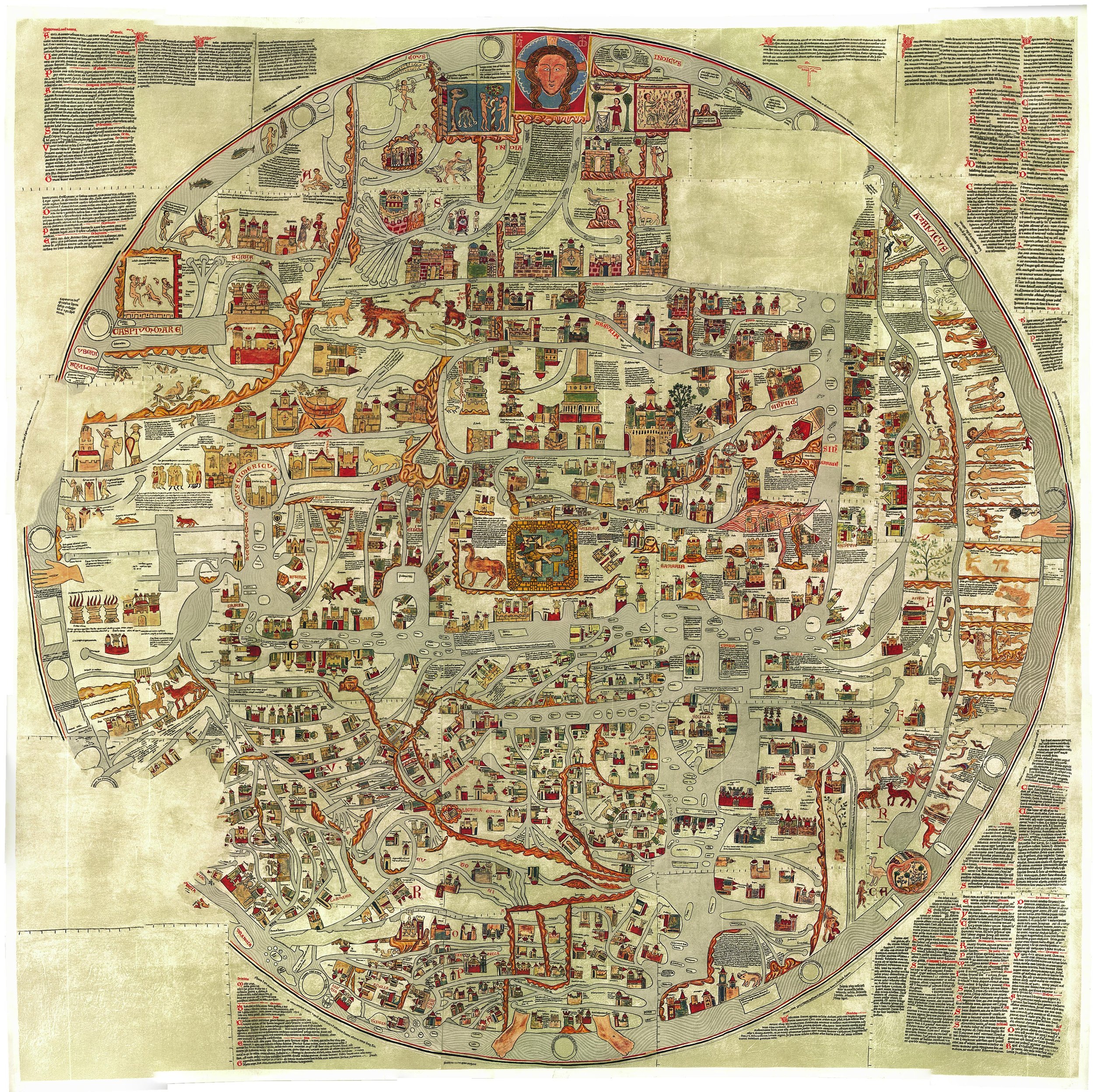
The Ebstorf mappa mundi from the early 1200s CE
Virgil begins to detail his mappa mundi—or his “mappa inferno”—with a closer look at the seventh circle of hell, the one just ahead: the circle of the violent.
He’s already given the pilgrim the schema of force and fraud as the methods of injustice and malice. Here comes force in all its scholastic glory.
Yep, Virgil reasons scholastically, dividing the seventh circle into parts and divisions, each smaller than the last, all to arrive at a three-part structure of the seventh circle—and a three-part structure for the last part!
Let’s work through the knots in this piece of Virgil’s explanation of lower hell.
If you’d like to donate to this work to keep it afloat, consider a one-time contribution or a small monthly stipend. You can offer either through this PayPal button below:
The segments for this episode of WALKING WITH DANTE:
[02:16] My English translation of INFERNO, Canto XI, lines 28 - 51. If you want to see this translation, offer a comment on this episode, or find a study guide for deeper analysis, scroll down this page.
[04:42] Virgil's explanation of the seventh circle. He begins by dividing violence into three parts: against God, against yourself, and against your neighbor.
[14:38] The first of the inner rings in the seventh circle: violence against your neighbor and your neighbor's goods.
[17:06] The second of the inner rings: violence against yourself and your own property.
[22:04] The third of the inner rings: violence against God, which itself takes three forms.
[29:18] A brief overview of the circle of the violent, the most unnatural part of hell we've yet encountered.
My English translation of INFERNO, Canto XI, lines 28 - 51:
The first circle is all about the violent—
But because force may be directed at three persons,
The circle is actually constructed and divided into three smaller rings.
Against God, against oneself, and against one’s neighbor
You can commit acts of violence—that is, against them and their possessions,
As you will hear through clear reasoning.
Death by force and ghastly wounds
May be thrust upon one’s neighbors. What’s more, their effects
May be subject to pillaging, arson, and even extortion.
Therefore, when it comes to murderers and those who inflict willful harm,
As well as plunderers and predators,
The first of the smaller rings torments all these in separate sections.
People can lay violent hands on themselves,
And their own effects, and so the second
Smaller ring holds those who repent without any results—
That is, the ones who deprive themselves of your world,
The ones who gamble away and squander their nest eggs,
The ones who weep where they should be happy.
A person can also use force against the deity
When we deny or commit outright blasphemy in the heart,
And also by disrespecting nature and its beneficence.
So the smallest ring seals
With its signet both Sodom and Cahors,
As well as those who get violent against God in their hearts or tongues.
FOR DEEPER STUDY
Two translation issues:
I’ve often said that Virgil has little to no access to a concept of God in COMEDY, yet he does seem to name God at line 46: Puossi far forza ne la deïtade (literally, “Can be done force onto the deity”). Is la deïtade naming God or just offering a concept of God? Does this wording say something about Virgil? That he can offer an abstraction about the deity but has no personal connection to God, as Christian theology demands?
The key word for blasphemy, the lowest form of violence, is spregiando (from the infinitive spregiare), found at lines 48 and 51. A complicated word, I translated it as “disrespecting” at line 48 and “get violent” at line 51, although those choices may be too interpretive. The verb indicates a haughty contempt—maybe I should have chosen “sneers at” or “scorns.” The root of the problem here may be that the blasphemer thinks of God as a peer, someone the blasphemer can look down on . . . and (worse) someone who can suffer under a withering contempt. In other words, blasphemy may involve my attempt to bring God down to my level . . . and then push God even lower.
Four interpretive issues:
When Virgil first says that force (or violence) can be divided into three parts, he uses a loaded phrase: fa forza a tre persone (literally, “makes force of three persons”—line 29). Persons? It sounds like the trinity in Christian theology, one unified thing divided into three personal expressions. Is violence some trinitarian perversion? If God is love, is violence the inside-out of God? And which of the persons of the trinity then corresponds to which of the circles of violence? (FYI, the suicides will have a Calvary overtone to their punishment.)
Virgil may mention God (or “the deity”) later in the passage, but he leaves God out of hell’s construction at line 30: in tre gironi è distinto e costrutto (literally, “in three circles is divided and built”). Built by whom, Virgil? Why omit the one who builds?
Virgil says that the pilgrim will hear about violence con aperta ragione (“with open reasons”—line 33). I said this phrase was a reference to Scholastic reasoning/categorizing. Fair enough but perhaps we should also just look at the phrase as it stands without coloring it with theological principles. Virgil’s claim is that there’s a rational component to the construction of hell. He also claims that this rationality (or reason) is “open”—perhaps “obvious” or “clear.” We’ve talked about how the divisions of violence arise from Jesus’ notion of what the greatest commandment is. But what if the rational is actually the basis for the theological? Or the theological is evident even from the perspective of the rational?
When Virgil begins listing off the sub-categories of blasphemy at lines 46 - 51, it’s tempting to put them in some sort of order: this one is greater than that one. However, the only conjunction he uses is e (“and”): “violence is done against the deity when we deny and curse that one in our hearts and scorn nature and its bounty and so the small circle stamps its signet of Sodom and Cahors and the ones who scorn God with hearts, tongues.” Linking all this with just “and” flattens everything, possibly putting it all outside of a hierarchy, as if blasphemy is really just one big thing.
One journaling prompt:
How would you divide violence in your world? What are its categories, its expressions? Would you then rank the divisions, putting one “lower” than another?