49. Cosmic Battles And Interpersonal Squabbles: INFERNO, Canto X, Lines 1 - 21
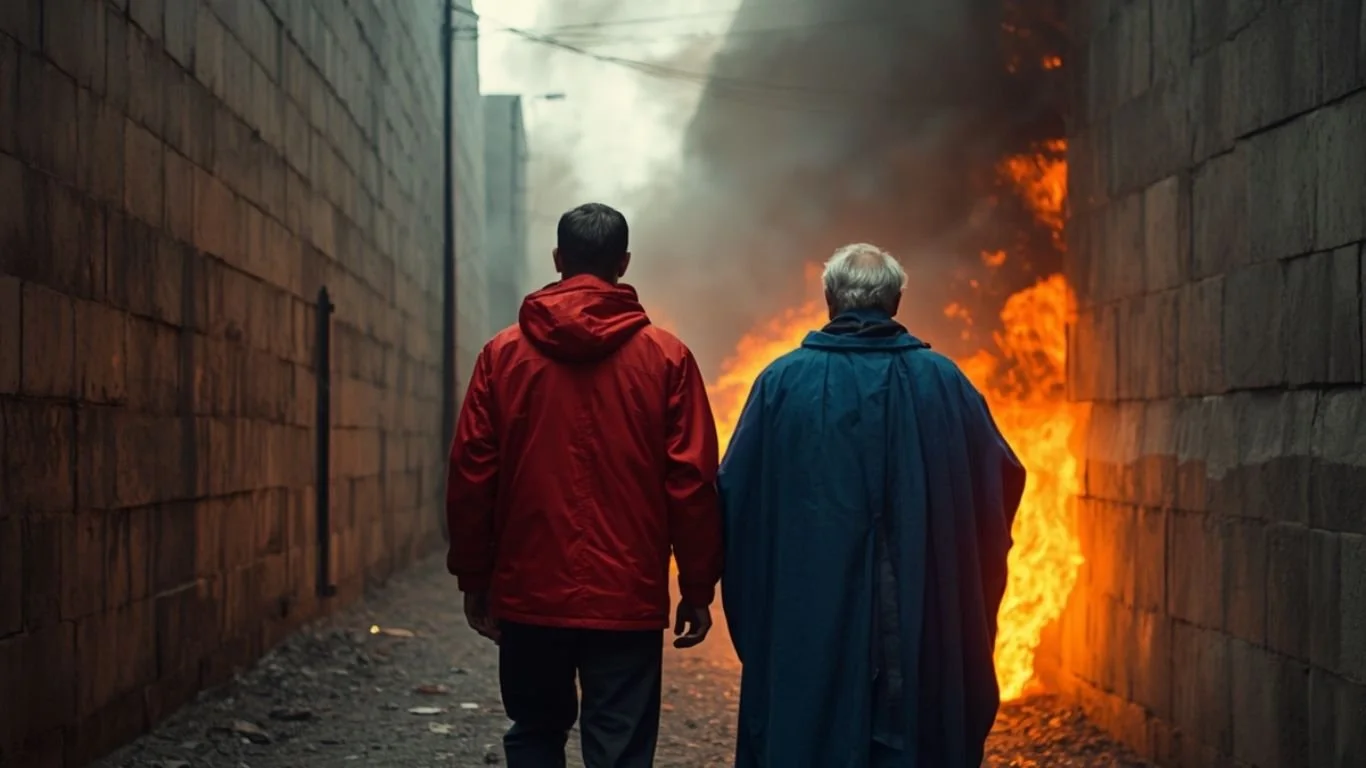
Picking their way along a secret path between the walls and the flames
We’re well into the sixth circle of hell, although we’ve yet to see any of the damned. Instead, our pilgrim and his guide pick their way along a secret path between the burning sarcophagi and the walls of Dis.
As they walk, we find out we’re among the Epicureans. Curious. How can pagans be heretics?
And it gets “curiouser.” Virgil again brings up the Last Judgment, this time emphasizing the bodily resurrection of the damned. And then he picks a fight with Dante.
Let’s talk about these cosmic and interpersonal divisions as we pick our own way along the text.
The segments for this episode of WALKING WITH DANTE:
[01:47] My English translation of this passage from INFERNO: Canto X, lines 1 - 21. If you want to see this passage, find a deeper study guide, or drop a comment so we can continue the conversation, scroll down this page.
[03:21] One overarching point about the circle of the heretics: It's all about human divisions.
[04:29] My first gloss (or commentary on the text): The secret path is a reference to Vergil's AENEID, Book VI, line 443. In this passage, Aeneas comes to realize his complicity in the suffering of Dido.
[06:32] My second gloss: Dante calls Virgil "highest virtue" (or maybe the "loftiest power," depending on how you want to translate it). Is Virgil that? You sure?
[09:54] My third: There's a twisted reference to the resurrection of Christ in this passage--and that thematic will play out throughout Canto X, which riffs in irony off the resurrection.
[11:23] My fourth: Virgil makes a reference to Jehoshaphat, the site of the Last Judgment according to the Old Testament prophet Joel.
[13:48] My fifth: We are among the Epicureans. Why? And how can Epicurus, who lived long before the Christ, be a heretic?
[20:15] Rereading the passage: INFERNO, Canto X, Lines 1 - 21.
My English translation of Inferno, Canto X, lines 1 - 21:
Now my master went along a hidden path
Between the walls of the city and the horrors,
And I stayed right at his back.
“O highest virtue, who wheels me
Around these wicked circles,” I began, “if it pleases you,
Let’s talk and fulfill my desires.
The people who lie in these sepulchers,
Might they be seen? All of the lids are off
And no one stands guard.”
And he to me: “All of these tombs will all be closed up
When these return from Jehoshaphat
With the bodies they left up above.
In this part of the cemetery are buried
Epicurus and all his followers,
Who made the soul and body die a single death.
As to the question that you made to me,
Your satisfaction is about to happen inside here,
As well as the desire you keep back from me.”
And I: “Good guide, I wouldn’t hide
My heart from you except to speak fewer words,
For you have previously wanted me to do this very thing.”
FOR MORE STUDY
Sources for this passage:
For Aeneas and Dido in the afterlife, see THE AENEID, Book VI, around line 443.
For the resurrection sequence from the New Testament, see The Gospel of Matthew 28: 1- 4, but also The Gospel of John 20: 1.
For Jehosephat, see Joel 3: 2 - 8.
For Dante’s previous views on Epicurus, see THE CONVIVIO, Book IV, chapter iv, lines 11 - 12.
Two translation issues:
Although I translated line 2 as “the walls of the city” so that it was more understandable on first blush, the wording is even more expansive in the medieval Tuscan: “‘l muro de la terra” (literally, the walls of the territory). These walls form the division (ahem!) between upper and lower hell . . . and lower hell is a larger country, more than just a city. (FYI, terra as “city” is justified by other uses, although the Tuscan word does have wider meaning, too.)
Dante’s compliment to Virgil may be more astounding (or heretical) than my translation allows. He calls Virgil “virtù somma,” something like “consummate virtue.” And if that’s not lofty enough, the word virtù on its own is a bit of a problem, too. It carries the meaning or “power” or “ability,” not just moral worth. I could have translated it as “consummate power.” But I felt that was (almost?) too shocking for a first reading.
Three interpretive issues:
The canto opens with an tantalizing rhyme sequence. Line 2 ends with “il martìri” (the torments), line 4 ends with “li empi giri” (the wicked circles), and line 6 ends with “miei disiri” (my desires). You can probably see the progression: two references to hell linked in an end stop about the pilgrim’s desire. Is this linking an answer to whatever he’s hiding from Virgil at line 18? Is there something nasty here that attracts the pilgrim? And while we’re at it, the sequence ends on his desire—that which pushes the soul on to God in Dante’s theology. Is the pilgrim’s desire particularly warped at this moment? Is that why he’s hiding something from Virgil, the supreme virtue?
The connection between heresy and the apocalypse is an interesting modern problem, more so than a medieval one (and perhaps again shows us Dante as a poet on the cusp of our world). Before Dante’s day (and even in his day), heresy was mostly “about” the nature of Jesus: whether and how he was both divine and human. These Christological debates seem to fizzle out in the Renaissance; heresy becomes much more about how one conceives of the last judgment in the eighteenth century and beyond. I don’t want to step on any toes, but think about the vigorous and loud debates among U. S. Protestants about the rapture and coming of the messianic kingdom of peace. Why is the last judgment a rift in orthodoxy for the modern world?
When Virgil says the pilgrim’s request will be satisfied “inside here” (line 17), what does that mean? Inside this circle of hell? Inside this specific Epicurean graveyard? Or is this a veiled reference to interiority—that is, the questions will be answered “inside you”?
One journaling prompt:
I said that this canto is particularly about the political and historical basis for human division . . . which means that the canto is also about a person’s place in history. Why do we run from this notion in the modern world? Why do we want to see ourselves and others as ahistorical? What if you situated yourself as a product of history? What would that mean for who you are?