50. The Second Great Sinner Of Hell, Farinata degli Uberti: INFERNO, Canto X, Lines 22 - 51
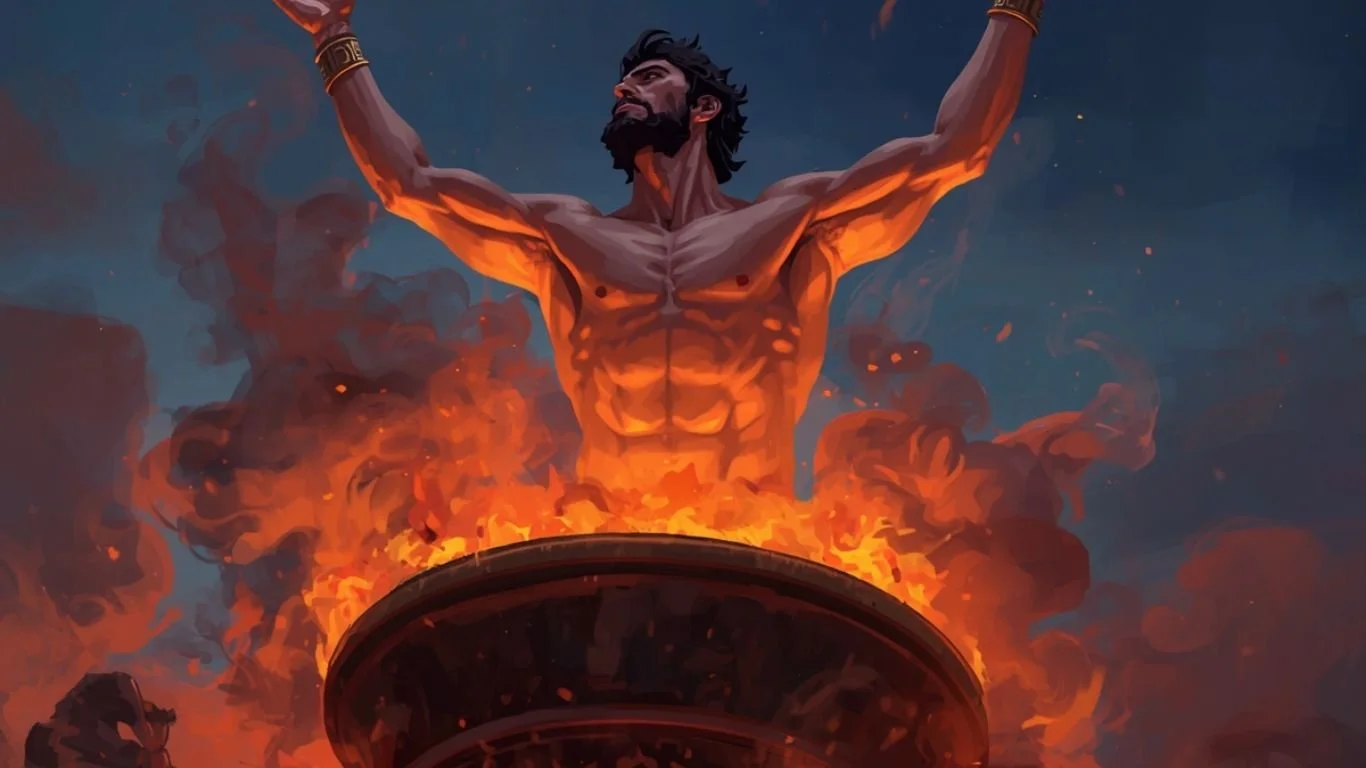
Farinata degli Umberti
What happens when you meet history face to face? And not one of the greats, not some hero. Rather, your archenemy, someone who caused your family pain.
Dante, our pilgrim, comes face to face with Farinata degli Uberti, one of the great sinners of hell, one of the great warlords of Florence, one of the men who caused Dante’s family such sorry . . . and one of the men who saved Florence from utter ruin.
History is complicated. Awful. Conflicted. Our pilgrim, too.
If you’d like to support this podcast, please consider a one-time donation or a small monthly stipend. You can use the link below:
The segments for this episode of WALKING WITH DANTE:
[01:42] My English translation of INFERNO, Canto X, lines 22 - 51. If you'd like to read along, find a deeper study guide, or drop a comment to continue the conversation, just scroll down this page.
[05:08] Who was Farinata?
[09:56] Farinata as a twisted Christ figure.
[14:37] Farinata and language.
[20:53] Farinata and politics.
[25:50] Can Farinata hold hell in contempt? Maybe there's an answer in Lucan's Pharsalia, Book VII
[30:29] Rereading INFERNO, Canto X, lines 22 - 51.
My English translation of INFERNO, Canto X, lines 22 - 51:
“O Tuscan, who is still alive in this city of fire
And goes about speaking such courteous words,
Pray be pleased to stay a moment in this place.
“Your elocution makes it evident that
You are one of those from the noble fathers of that city
To which I might have caused too much damage.”
So suddenly did the sound of this one
Come out of one of the chests that it startled me
And made me pull a little closer to my guide.
And he said to me, “Turn around! What are you doing?
Look at Farinata right there, who has pulled himself upright.
You can see all of him from the waist up.”
I’d already set my eyes on his as he rose
With his chest and brow pitched up
As if he held hell in great contempt.
Meanwhile, the sure and animated hand of my guide
Was nudging me toward his sepulcher,
Even as he said to me, “Make sure you count your words.”
When I was at the foot of his tomb,
He glanced at me and then, almost with disdain,
Asked me, “Who were your ancestors?”
I had a great desire to comply,
And hid nothing from him, but told him everything,
Which caused him to lift his eyebrows a little.
Then he said, “They were stark enemies to me,
My family, and my faction—
So much so that I had to drive them out twice.”
“If they were cast out,” I replied to him,
“They came back from every place both the first time and the other.
Your type, on the other hand, has never learned that art.”
FOR DEEPER STUDY
Three translation issues:
Does Farinata raise himself from the tomb? The reflexive verb I talked about in the episode happens at line 35: “ed el s’ergea.” Yes, it can mean “and he raised himself,” which is the way I translated it. However, reflexive verbs are sometimes used as a substitute for the passive voice in medieval Florentine, in which case the line would read, “And he was raised.” That wording brings up this (implicit but unanswered) question: Who was raising him? And in Dante’s theology, the only one who would raise someone out of tomb is God. Is God causing Farinata to appear before our pilgrim? Is this a fated moment in his journey? For what it’s worth, I think it is fated but perhaps now quite so heavily weighted. I think the passive-voice reading (“he was raised”) is too far for the text and doesn’t take into account the (false?) majesty of Farinata’s character. Also, “he was raised” robs the pilgrim of some of his responsibility and doesn’t account for the change in character that will happen in this passage. But even I’ll admit the poet has left the matter ambiguous.
You can also quibble with my interpretation of line 45 based on the translation: “which caused him to raise his eyebrows a little.” It’s that “a little” (“un poco” in the Florentine). I took this as a moment in which Dante’s honesty (lines 43 - 45) caused a reaction in the Stoic Farinata. But you could also read that “a little” as snide. Dante tells the warlord everything and Farinata discounts it all by barely raising an eyebrow and signaling, That’s not so much—who cares?
And Dante’s honesty comes from a complex motivation at line 43: Io ch’era d’ubidir disideroso (Iiterally, “I, who was of obeying desirous”). So much to unpack! First, there’s desire, that prime motivator, here put into the service of a warlord. Second, there’s obedience, that which the pilgrim would owe to his better in a feudal society. (Is a guy in hell still your better?) And finally, there’s the frank assertion of the pilgrim’s selfhood: a loud, first-position-in-the-line “I.” Is the pilgrim both standing up to and bowing down to Farinata?
Four interpretation issues:
As we established, Farinata stands up out of his tomb, mimicking the resurrection of Jesus. But Virgil told Dante that the Epicureans don’t believe in the resurrection, that they believe the soul dies with the body (Canto X, lines 14 - 15). How much irony is in the passage? I treated it as starkly political. Is that stark message undercut by the fundamental irony that Farinata unwittingly reenacts (or maybe is forced to reenact) what he doesn’t believe in?
Does Farinata regret his deeds? The problem arises at lines 26 - 27: di quella nobil patrïa natio,/ a la qual forse fui troppo molesto (literally, “of that noble city you were born,/ over which perhaps I was too cruel”). It all hangs on the “perhaps” (which in my translation I put into the conditional: “To which I might have caused too much damage”). If you think Farinata regrets his past, you must lean heavily into this line to say there’s a hint of self-doubt in that “perhaps.” I take it that Farinata is actually gloating and using a false modesty to snidely say, “Oh, I didn’t do so much.” In truth, the passage’s meaning can fall either way and has to be interpreted in the larger context of the conversation.
Does Farinata really hold hell in scorn (line 36)? In truth, the answer is ambiguous. In that line, the verb is in the subjunctive, so it doesn’t say outright that Farinata held hell in scorn. It’s much more that he might have held it in scorn. So does he? It’s unanswered, since we’re seeing this from the pilgrim’s perspective, which can’t penetrate Farinata’s interiority. (Nice ambiguity, Dante). However, we might be able to posit his motivation as centered on pride, the mortal sin that is not specifically punished in hell. (There is no circle of pride.) We might be able to point to a passage like this one and say that pride provides the support for so many of the sins of hell, a kind of baseline motivation. Think about Francesca’s preening monologues or Filippo Argenti’s overarching self-importance.
Is our poet preening, too? After the pilgrim tells Farinata everything, the warlord responds that “they” were fiercely opposed to him (lines 46 - 47). Who are the “they”? If Dante spoke generally about the Guelphs, Farinata is responding to that larger, socio-historical context. However, if the pilgrim told the tale of his own family, Farinata is promoting them into major players in the conflict—that is, his direct adversaries. Problem is, there’s no historical evidence that Dante’s family were so grandiose, that they stood up to confront Farinata personally. If he’s talking about Dante’s family, then he—but more importantly, the poet behind him—is elevating the family to a status they never held.
One journaling prompt:
Is there someone in your life you think is worthy of hell? What if you casually met them, say at a party or on a walk in a park? What if they tried to engage you in conversation? What would you say?