38. An Interpolated Episode: Nothing In Dante's Hand--A Brief History Of COMEDY's Manuscripts
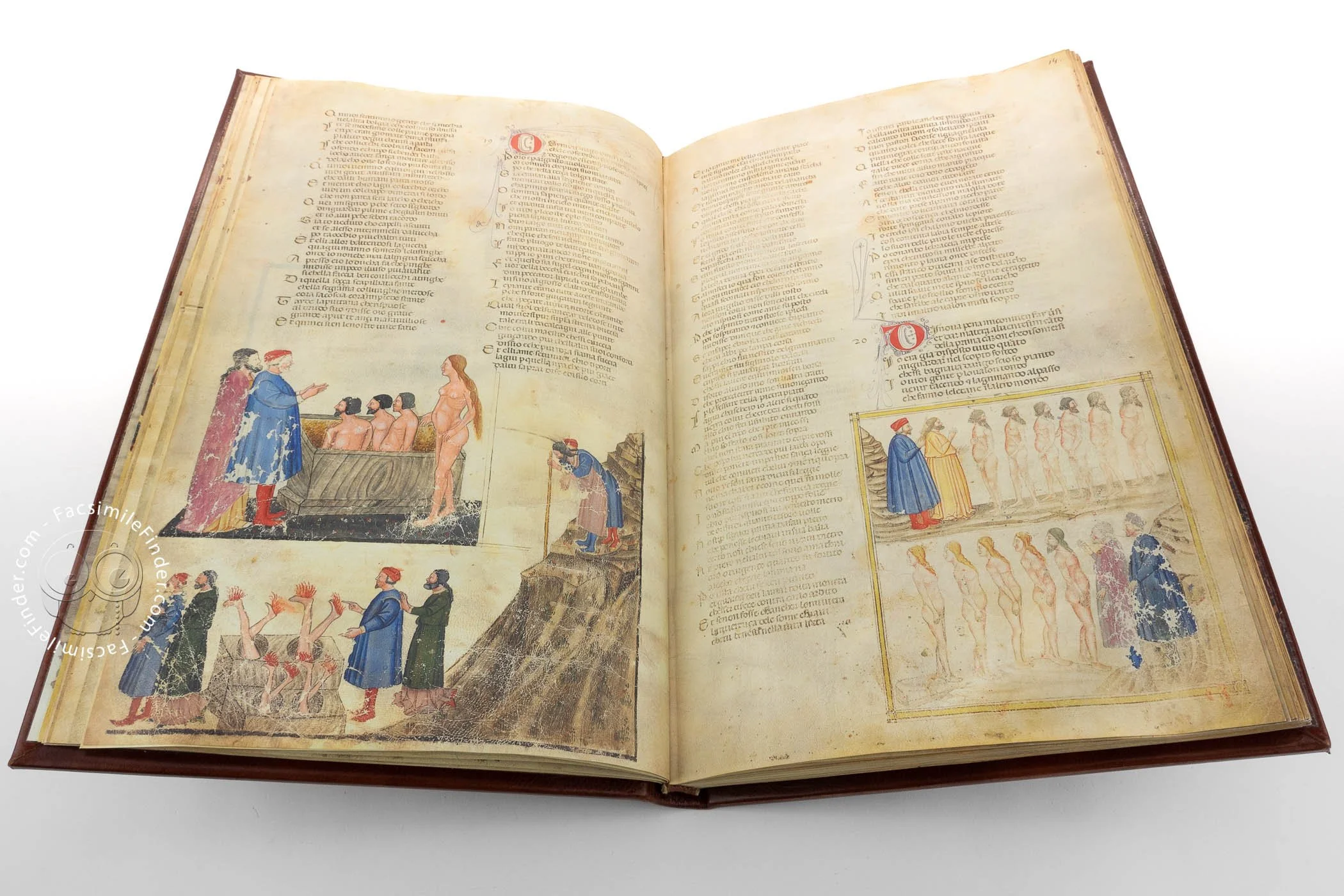
The gorgeously illustrated, late-fourteenth century Marciana manuscript from Venice
Let’s talk about the history of the COMEDY manuscripts. We don’t have anything in Dante’s own hand. What do we have? And how do we know we can trust what we have?
I'll talk you through some basic facts, as well as the curious fact that we have commentaries on COMEDY written between the poet's death and the first dated manuscript. I’ll also talk about the two dominant manuscript traditions that exist today . . . and the truth of the matter: in the end, there are so few differences among the manuscripts.
Scroll down this page to find links to some of the more prominent manuscripts now online.
If you’d like to help underwrite this podcast, whether with a one-time gift or a small monthly stipend, please consider donating at this PayPal link.
The segments of this episode of WALKING WITH DANTE:
[00:49] Three facts you need to know to start thinking about the textual history of COME.
[11:23] There are two types of manuscript corruption: horizontal and vertical.
[14:15] There are now two main "veins" of COMEDY manuscripts—and a bit about the strange nationalist divides that predict who follows which vein back toward the source.
FOR MORE STUDY
To recap, here are the important stats:
1321: Dante dies.
1322 - 1336: Six commentaries are written on either INFERNO or COMEDY as a whole.
1336: most likely, the oldest manuscript that we have.
1336 - 1440s: over 600 manuscripts of COMEDY are produced (before the printing press).
If you’d like to see the Bodleian illustrated manuscript for COMEDY, you can find it digitized at this link.
I spoke of a video about this famous manuscript. You can find it here.
If you’d like a quick tour of the British Library’s COMEDY collection, please watch this video.
If you want to go down a seemingly endless but fascinating rabbit hole, you can find seven of the early manuscripts digitized, collated, and even compared at this brilliant site by the renowned Dante scholar Prue Shaw.
An online copy of Prue Shaw’s article on manuscript transmission appears to have disappeared since I recorded this episode. However, you can still find it published in a collection of essays, an introduction to which you can find here.
The U. S. Library of Congress has what appears to be one of the (or perhaps the) manuscript for COMEDY in Boccaccio’s hand, including his introductions to the three canticles (or larger sections) of the poem. You can take a look at it here.
I spoke about the Villani manuscript, the other main manuscript tradition these days. It has been digitized and is available here.
For a treasure trove of illustrations from a fifteenth-century edition of COMEDY, please check them out at this public domain site.